
Replacing a Built-In Oven
Built-in ovens are more straightforward to replace than hobs in some ways — the width is standard across all brands and they slot into dedicated appliance housing cupboards. However there are a few important things to check before you buy, particularly around height, depth and the gas or electrical connection.
Here are the key things to think about:

Step 1 — Oven Height
All built-in ovens are the same width and fit into standard appliance housing cupboards. However they come in three different heights and it is essential you buy the correct height for your existing housing.
- 600mm — standard single oven
- 700mm — double oven, compact
- 900mm — double oven, full size
You must replace like for like in terms of height. Measure your existing oven or the housing aperture before purchasing.
600mm and 700mm ovens can be fitted below a worktop or in a tall housing unit. 900mm ovens can only be fitted in a tall housing unit.
700mm and 900mm ovens typically come with fixing brackets to secure them into the housing — these are supplied with the oven.
Changing Height
If you want to change from one height to another — for example replacing a 900mm double oven with a 700mm — the housing cupboard will need to be altered to fill the gap and make good. This is joinery work and will require a kitchen fitter or carpenter either before or after the new oven is installed, depending on whether the gap will be above or below the oven. The oven itself needs to sit on a shelf within the unit, so the joinery work must be planned carefully before ordering.
Step 2 — The Electrical Connection
The electrical requirements for built-in ovens follow the same rules as hobs:
- Single electric ovens — plug into a standard 13 amp socket
- Single gas ovens — plug into a standard 13 amp socket
- Double gas ovens — plug into a standard 13 amp socket
- Double electric ovens — hard wired into a dedicated cooker circuit
If you are replacing a double gas oven with a double electric oven, a dedicated hard wired cooker circuit will need to be in place. If one does not exist, a qualified electrician must install one — this is a notifiable electrical job and cannot be DIY. Dependent on location, FixCookers may be able to arrange this.
When checking what you currently have, you may find one of the following:
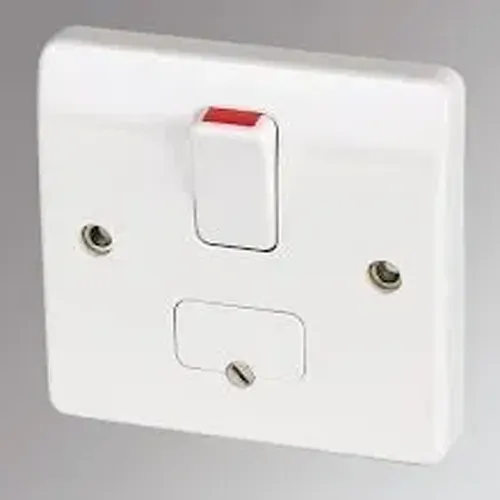
Fused Spur
A switched fused outlet — commonly used for oven ignition in place of a normal plug in socket. Notice the fuse holder which distinguishes it from an unfused isolation switch.
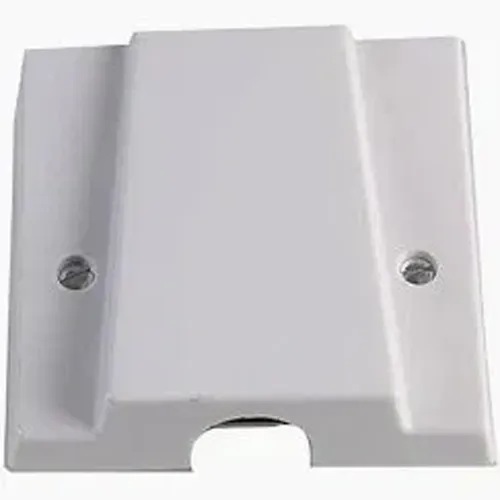
Hardwired Connection Box
The correct way to hard wire a double electric oven — the cable from the isolation switch terminates here and the oven connects into it.
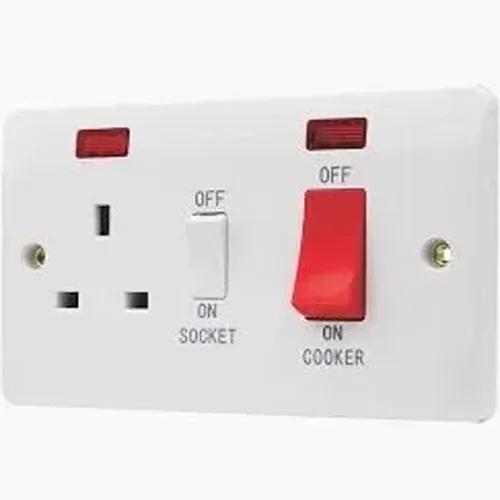
Cooker Control Unit with Socket
A 45 amp isolation switch combined with a standard 13 amp socket.
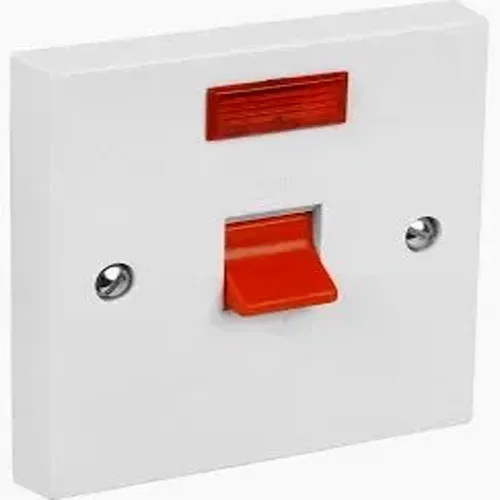
Cooker Isolation Switch
A 45 amp double pole switch with no socket — used to isolate the double electric oven circuit.
You may also find just a grey cable — typically 6mm twin and earth — disappearing into the plaster with no connection box. This means the cable runs directly to the isolation switch. While common, this is not best practice.
Watch Out — A Common Wiring Bodge
A common bodge carried out by unqualified installers is to hard wire a gas oven or hob into a cooker point alongside an electric oven — this is incorrect and potentially dangerous. If you suspect this has been done in your property, mention it when you call and we can advise.
Step 3 — The Gas Connection
Gas ovens connect via a flexible cooker hose. This hose is supplied by FixCookers as part of the installation — it does not come with the oven.
Bayonet Connection Position
This is an important safety requirement that is often overlooked. The bayonet connection — where the flexible hose connects to the gas supply — must be located directly behind the oven. It must not be in a cupboard above, below or to the side.
If your bayonet connection is not in the correct position, pipework alterations will need to be carried out before the new oven can be installed. FixCookers can advise on this when quoting.
Step 4 — Depth and Ventilation
Depth and Gas Hobs
If you have a gas hob above the oven, the depth of the new oven is an important consideration. Built-in ovens vary in depth, and some have more clearance at the rear upper edge than others. The gas pipework beneath a gas hob can protrude into this space — if the new oven is deeper than the old one, or has less rear clearance, it may not push fully back into the housing.
If this is the case, the gas pipework can be altered to resolve it, though this will be at an additional cost. This does not affect installations where there is an electric hob above.
Always check the depth of your chosen oven against the available space in the housing before purchasing, particularly if you have a gas hob above.
Ventilation
All built-in ovens require adequate cooling air ventilation. This is normally provided by the housing cupboard design — cool air enters from floor level through a gap in the kickplate and is then vented either above the oven or up to the top of the cupboard at the rear. It is worth checking the installation manual for your specific model to confirm the ventilation requirements are met in your kitchen.
Removing the Old Oven
The ideal and recommended installation is one where the oven can be pulled out of its housing and placed on a workbench or the floor without disconnecting the gas or electrical supply. This allows a service engineer to work on the appliance in situ if it develops a fault — without having to disconnect it first.
Anything less than this is undesirable. If an appliance cannot remain connected to both the gas and electrical supply while it is out of its housing, something is not quite right with the installation and it is worth having it looked at.
FixCookers will remove your old oven as part of the installation but does not take it away. Leave it beside your bins for the scrap metal collector, or take it to your local household waste and recycling centre.
Ready to Replace Your Oven? Call FixCookers
Based in South Yorkshire, covering Sheffield, Rotherham and Barnsley. Gas Safe registered, 30 years experience, fully insured.

07951 899378
WhatsApp Us