

Replacing a Hob
Whether you're replacing like for like — gas for gas, electric for electric — or switching fuel types entirely, there are three things you need to think about before you buy a new hob or pick up the phone:
Work through each section below and you'll know exactly where you stand before calling FixCookers.
Step 1 — The Electrical Connection
Gas Hobs
Gas hobs should always be plugged into a standard 13 amp socket or a fused spur — never hard wired.
The mains lead supplied with the hob is typically 1.2 metres long and a maximum of 1.5 metres, so the socket will always be close to the appliance.
When looking for the socket, check:
- In the cupboard to the left or right of the hob
- Underneath the hob itself
- Behind the kickplate at the bottom of the unit — the kickplate is usually held on by clips, though it can occasionally be screwed in at the ends
Electric and Induction Hobs
An electric hob — whether induction or ceramic — draws far more power and must be hard wired directly into a dedicated cooker circuit rated at 32 amp or 45 amp. It cannot be plugged into a normal socket and must have its own circuit breaker in the consumer unit.
When checking what you currently have, you may find one of the following:
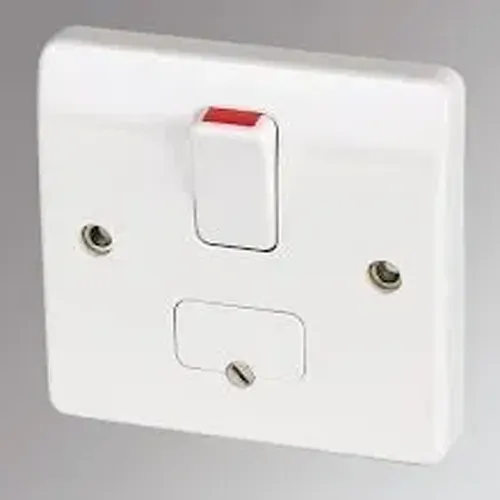
Fused Spur
A switched fused outlet — commonly used for gas hob ignition in place of a normal plug in socket. Notice the fuse holder which distinguishes it from an unfused isolation switch.
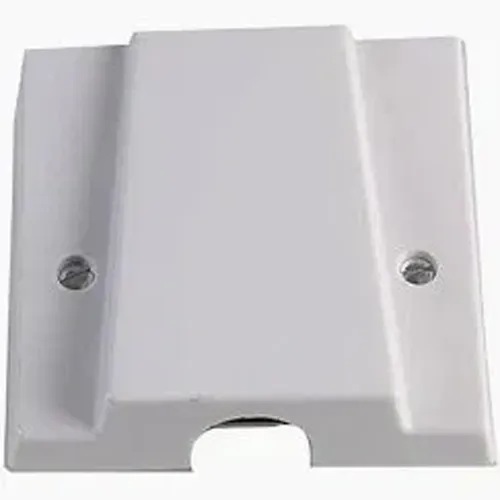
Hardwired Connection Box
The correct way to hard wire an electric hob — the cable from the isolation switch terminates here and the hob connects into it.
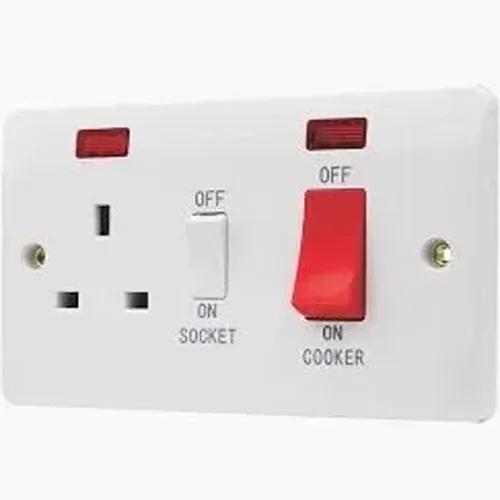
Cooker Control Unit with Socket
A 45 amp isolation switch combined with a standard 13 amp socket.
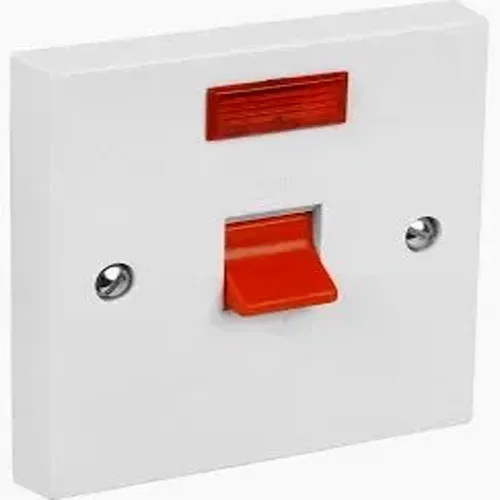
Cooker Isolation Switch
A 45 amp double pole switch with no socket — used purely to isolate the electric hob circuit.
You may also find just a grey cable — typically 6mm twin and earth — beneath the hob disappearing into the plaster and not connected to a connection box. This means the cable runs directly to the isolation switch. While common, this is not best practice.
Power Sharing Induction Hobs
There is an important exception to the hard wiring rule. Some induction hobs are specifically designed to replace a gas hob without the need for a new circuit — these use a technology called power sharing. The hob manages its total power consumption so that it never exceeds what a standard 13 amp socket can safely supply. This means it plugs in just like a gas hob.
The trade-off is that the hob will not allow all zones to run at full power simultaneously — it intelligently shares the available power between active zones, switching between them as needed. For most everyday cooking this is barely noticeable, but it is worth being aware of before you buy.
If you are switching from gas to electric and do not want the cost and disruption of a new circuit, look specifically for induction hobs described as power sharing or 13 amp compatible.
Induction Hob Clearance
Many induction hobs have cooling fans underneath that require adequate clearance to operate safely — typically a minimum of 10mm. This is specified in the installation manual. Check this before purchasing, particularly if your unit has a drawer directly below the hob.
There may also be a requirement to fit a false shelf below the hob, especially where there is a drawer underneath, to prevent items such as cutlery sticking up through the ventilation holes beneath the hob.
Watch Out — A Common Wiring Bodge
Single door ovens — whether gas or electric — and double gas ovens should all be plugged into a standard 13 amp socket. Double electric ovens are hard wired. A common bodge carried out by unqualified installers is to hard wire both an electric or gas hob and an oven together onto a single cooker point — this is incorrect and potentially dangerous. If you suspect this has been done in your property, mention it when you call and we can advise.
Step 2 — The Gas Connection
If you are replacing a gas hob with a gas hob, the existing pipework will need adjustment to fit the new hob — gas connection positions on hobs are not universal and the new appliance will most likely require a different configuration. This is included in the installation quote.
If you are replacing a gas hob with an electric hob, the gas supply will need to be capped off by a Gas Safe registered engineer. FixCookers handles this as part of the installation.
If you are replacing an electric hob with a gas hob, you need to think about how the engineer will join into the nearest existing gas pipe and run the supply to the hob position. Depending on your kitchen layout this can be straightforward or may involve routing pipework through cupboards and walls. FixCookers can carry out this work as part of the installation.
Switching Fuel Type
Gas to Electric or Induction
- The gas supply to the hob must be capped off by a Gas Safe registered engineer — FixCookers handles this as part of the installation
- A dedicated electric cooker circuit must be in place — arrange a qualified electrician if one does not already exist
Electric to Gas
- If there has never been a gas hob in this position, a new gas line will need to be run — FixCookers can do this
- If a gas supply was previously capped off here, it can often be reinstated
- A standard 13 amp socket is needed nearby — if you have an unused cooker point outlet, FixCookers can rewire this to a normal socket
Step 3 — The Worktop Cut-Out
Before you buy a new hob, you need to know the size of the cut-out in your worktop. The dimensions printed on the box or listed online are the overall size of the hob — not the cut-out size required. The required cut-out dimensions are in the installation section of the user handbook, which can usually be downloaded from the manufacturer's website before you buy.
How to Measure the Cut-Out
With a gas hob, the only way to measure the existing cut-out accurately is from below — the hob sits over the hole and covers the edges. This means the oven or drawers underneath will need to come out first.
 1
1
Remove the Oven or Drawers
You need access from below to measure accurately
If there is an oven below the hob, it is usually straightforward to remove. Most built-in ovens are held in place by two or four screws fixing them to the cabinet fronts — remove these and the oven should pull straight out.
If the appliance is plugged into a normal socket in the neighbouring cupboard you may have to unplug it to pull it fully clear. However, leaving it powered up where possible means you won't need to reset the clock when you put it back.
If there are drawers below, these can typically be lifted out of their runners — sometimes they have a small release lever.
The kickplate at the very bottom is usually held on by clips, though it can occasionally be screwed in at the ends.
2
Take Four Measurements
Front to back on both sides, and left to right at front and back
Using a tape measure, take the following four measurements of the cut-out from below:
- Front to back — left side
- Front to back — right side
- Left to right — at the front
- Left to right — at the back
The measurements should be the same on both sides, but this is not always the case. Where a pair of measurements differs, always go with the shorter one. If your new hob's required cut-out is larger than the shortest measurement in either direction, it will not fit without further work to the worktop.
3
Worktop Material Matters
Timber can be resized — granite and quartz need a specialist
- Timber worktops — can be resized, but ideally buy a hob that drops straight in. Additional cutting adds to the installation cost.
- Granite and quartz worktops — cutting these requires a specialist stone cutter with diamond-tipped equipment. If the new hob requires a larger cut-out, arrange this before booking installation. If the new hob is smaller than the existing hole this is equally problematic — filling a granite or quartz cut-out is not straightforward.
Cut-out sizes vary considerably between brands and models. Always download the installation manual for your specific model and check the dimensions before purchasing.
Important — Hobs Should Never Be Silicone Sealed
No hob should be silicone sealed into the worktop. This is against manufacturers' installation instructions and can cause serious damage to the worktop and the hob when it comes to removal. If your existing hob has been siliconed in, make sure this is mentioned when you call — it affects the removal process.
What to Do With Your Old Hob
FixCookers will remove your old hob as part of the installation but does not take it away. Leave it beside your bins for the scrap metal collector, or take it to your local household waste and recycling centre — most councils offer free appliance disposal.
Recommended Order of Steps
- 1. Check the electrical supply — what's behind or below the hob
- 2. Check the gas connection requirements
- 3. Remove the oven or drawers below and measure the cut-out from underneath
- 4. Download the installation manual for your chosen hob and check the required cut-out dimensions match
- 5. If a new electrical circuit is needed, arrange a qualified electrician first — dependent on location, FixCookers may be able to arrange this
- 6. If a granite or quartz cut-out needs resizing, arrange a stone specialist first
- 7. Call FixCookers to handle the gas work, electrical outlet changes and the installation itself
Ready to Replace Your Hob? Call FixCookers
Based in South Yorkshire, covering Sheffield, Rotherham and Barnsley. Gas Safe registered, 30 years experience, fully insured.

07951 899378
WhatsApp Us